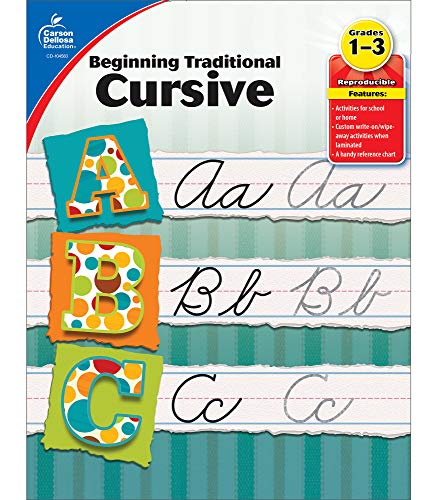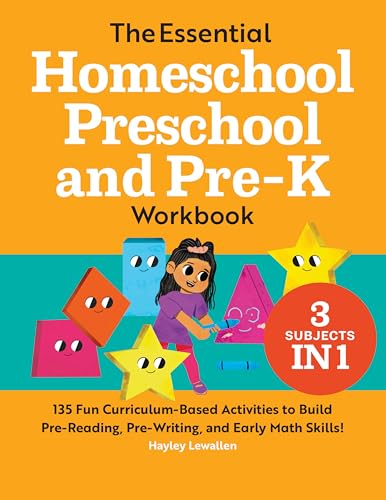
Catforms Testing Service offers the 1970 California Achievement Tests with their own answer sheets and computer scoring. Key features of this system include graphical results in color, cumulative comparisons from year to year, and a detailed analysis of strengths and weaknesses in each area of the test. In addition to the original 1970 norms, they also have their own norms, the Catforms Percentiles, which are updated annually from the tests they have on file. The Catforms Percentiles are not a national norm, but are useful in comparing your students' performance with others from Christian schools and home schools today.
Footsteps Magazine is a magazine designed for young people, their parents, and other individuals interested in discovering the scope, substance, and many often unheralded facts of African American heritage. It is an excellent classroom resource for teachers, a valuable research tool for students, and an important vehicle for bringing this rich heritage to people of all backgrounds.
JUMP Math is a numeracy program. JUMP Math is dedicated to enhancing the potential in children by encouraging an understanding and a love of math in students and educators. JUMP Math replaces the self-fulfilling myth that some people are born with mathematical ability while others do not have the ability to succeed with assumptions that all children can be led to think mathematically. They offer educators, tutors and parents complete and balanced materials as well as training to help them reach all students. JUMP Math draws on the latest cognitive science research to build upon the best aspects of math programs from around the world to provide a unique combination of depth, careful scaffolding, continuous assessment and a variety of innovative instructional approaches. Many parents in Canada and the United States use JUMP Math to homeschool their children. In a homeschool, JUMP Math works by helping adults lead children through a tailored process of micro-teaching, guided discovery and practice that gradually extends student understanding. JUMP Math has found that children learn better when they feel admired and are confident they will not be allowed to fail. Teachers therefore communicate their belief that all students can learn, and reinforce this belief with frequent and specific encouragement. This creates a positive learning environment, which in turn leads to more academically focused behaviour.
It must be clear at the outset that there are no sure-fire rules of education that apply to all children at all times. Reishis Chachmah quotes a Midrash that it is easier to raise a legion of olive trees in the Galilee, where the soil and climate are not conducive to growing olive trees, than to raise one child in the Land of Israel, even though Israel is conducive to proper education, since the atmosphere itself helps to imbue one with wisdom and holiness. Children are not objects to be fashioned at will, but rather human beings who have their own free will and can reject, if they so choose, even the best education. The most a parent can hope to achieve, as Chiddushei HaRim points out regarding all learning, is to put the words of Torah on the heart of the child so that when the heart opens up, the Torah found on it will sink into the receptive heart.
This report, Homeschooling in the United States: 1999, presents an estimate of the number of homeschooled students, characteristics of homeschooled children and their families, parents' reasons for homeschooling, and public school support for homeschoolers. Major findings from the Parent-NHES:1999 indicate that in the spring of 1999, an estimated 850,000 students nationwide were being homeschooled. This amounts to 1.7 percent of U.S. students, ages 5 to 17, with a grade equivalent of kindergarten through grade 12. Four out of five homeschoolers were homeschooled only (82 percent) and one out of five homeschoolers were enrolled in public or private schools part time (18 percent). It also found that a greater percentage of homeschoolers compared to nonhomeschoolers were white, non-Hispanic in 1999—75 percent compared to 65 percent. At the same time, a smaller percentage of homeschoolers were black, non-Hispanic students and a smaller percentage were Hispanic students. Further, it was found that the household income of homeschoolers in 1999 was no different than nonhomeschoolers. However, parents of homeschoolers had higher levels of educational attainment than did parents of nonhomeschoolers.