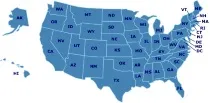
This brief uses data from the 2003 National Household Education Surveys Program (NHES) to estimate the number of homeschooled students in the United States in 2003 and to discuss the reasons parents decide to homeschool their children. The brief also shows that the number of homeschoolers, and the proportion of the student population they represent, has increased since 1999.
All applications for excuse from school attendance shall be on a standard form acknowledged before a notary or two witnesses. The form shall be provided by the secretary of the Department of Education. If the application is granted, a certificate of excuse also provided by the secretary of the Department of Education shall be issued by the president of the school board having jurisdiction over the district in which the child has school residence. The certificate of excuse shall be for a period not to exceed one year and shall state the reason for the excuse is that the child will receive alternative instruction. Upon a showing by the secretary of the Department of Education that a child excused from school attendance pursuant to § 13-27-3 is not being instructed in compliance with § 13-27-3, the school board may immediately revoke the child's certificate of excuse. All test scores required by § 13-27-3 shall be kept on file in the public school of the district where the child has school residence. If subsequent achievement test results reveal less than satisfactory academic progress in the child's level of achievement, the school board may refuse to renew the child's certificate of excuse.
Stuff! For homeschool families, it's everywhere. Books and papers. Art supplies. Math manipulatives. Science projects. Record-keeping demands its own set of materials: attendance forms, correspondence, testing, student portfolios, and piles and piles of paper! Find out strategies for storing kid's stuff, using color coding, organizing your desk, and more.
Assessment is authentic when we directly examine student performance on worthy intellectual tasks. Traditional assessment, by contract, relies on indirect or proxy 'items'--efficient, simplistic substitutes from which we think valid inferences can be made about the student's performance at those valued challenges.
When it comes to math, a good foundation is essential. With these fun math activities for kids, numbers become friends and the basic foundation for the subject is established at an early age. Different math activities for kids of different age groups can be effective in teaching them basic but essential math concepts. Here are some interesting grade-based math activities that parents and teachers can use to make math a whole lot of fun!
Ray's Arithmetics teach arithmetic in an orderly fashion, starting from rules and principles, building knowledge piece by piece, leading pupils from simple to complex. From the very first pages, Ray's Arithmetics incorporate what has become the scourge of today's math students - story problems. Students must READ simple sentences which pose real life problems, decide whether to add, subtract, multiply or divide, and finally arrive at the answer - sometimes mentally - sometimes in writing.